
Blog · 26 August 2026
Country import requirements: what actually changes by destination
Every destination asks for the same seven things in a different order, with different deadlines. Here is what varies, and which countries are strict about what.
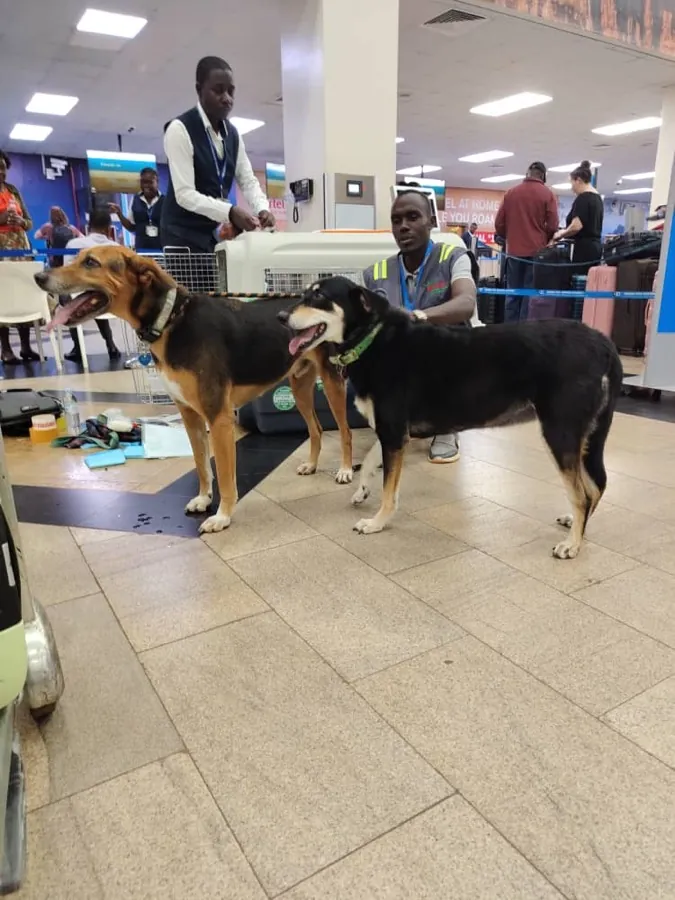
People ask us for a country-by-country checklist. We do not publish one, and we would be suspicious of anyone who does — these rules change without notice, and a page that was right last year can cost you a flight this year.
What is stable is the shape of the difference. If you understand which levers move between destinations, you can plan sensibly and let us confirm the current detail for your route.
The seven things every destination asks about
Nearly every country wants some version of: microchip, rabies vaccination, rabies titer test, parasite treatment, an import permit, a veterinary health certificate, and an approved entry point.
What changes is which of those apply, how long each takes, and how tightly the windows are policed.
Lever 1: is a titer test required?
This is the single biggest fork in the road.
Rabies-free and rabies-controlled destinations generally require a rabies antibody titration test with a waiting period afterwards, often counted from the date the blood sample was drawn. That waiting period usually dominates the whole timeline.
Destinations without that requirement can often be planned in weeks rather than months. Regional moves — Kenya, for instance — are frequently in this group.
If you take one thing from this article: find out whether your destination requires a titer test before you do anything else. It is the difference between a two-month project and a six-month one. We wrote a separate guide on how the test works.
Lever 2: quarantine on arrival
Some destinations admit a compliant pet straight to the owner. Others require a period at an approved quarantine facility, and a few require the facility booking to be confirmed before the import permit is issued — which means before you can sensibly book a flight.
Where quarantine applies, the booking slot becomes the fixed point that everything else is planned around.
Lever 3: how long the permit takes
Import permits range from a formality to a multi-week process with its own supporting documents. Some are valid for a generous window; others expire quickly, which means applying too early is as much a problem as applying too late.
We do not book flights against an unapproved permit. That is the fastest way to lose a booking and a deposit.
Lever 4: breed and airline restrictions
Two separate things get confused here.
Destination breed rules — some countries restrict or prohibit specific breeds entirely, regardless of paperwork.
Airline rules — carriers set their own policies on snub-nosed (brachycephalic) breeds, on crate sizes, and on flying animals at all during hot months. A destination that will happily admit your dog may be served only by an airline that will not carry it in July.
Both need checking, and they are checked in different places.
Lever 5: the entry point
Many countries designate which airports may receive live animals. This constrains the route before anything else does, and it is a common reason a cheaper itinerary is not actually available.
Lever 6: who signs
Some destinations accept a health certificate signed by a licensed veterinarian. Others require endorsement by the exporting country's competent authority, and a few require additional legalisation. That step has its own lead time and cannot be done retroactively.
The destinations we handle most
We run routes to the United States, Canada, the United Kingdom, Europe, Australia, the United Arab Emirates, South Africa and Georgia most often, plus many others on request. Familiarity matters: we know which of these move slowly, which have caught people out recently, and where to build in slack.
That is not the same as us publishing their rules. For your specific pet, on your specific dates, we confirm the current requirements directly.
How to use this
- Tell us the destination as early as you know it — even before dates are firm
- We check whether a titer test and quarantine apply, because those set the timeline
- We confirm the current permit process, entry points and endorsement route
- You get a calendar with the fixed dates marked, and we work backwards from them
Anything you read online about import rules — this page included — is orientation, not authority. Ask us to confirm your route; it costs nothing.