
Blog · 12 August 2026
Rabies titer testing, explained without the jargon
The one test that decides whether your move takes two months or six — what it measures, when the sample must be drawn, and why the waiting period starts earlier than you think.
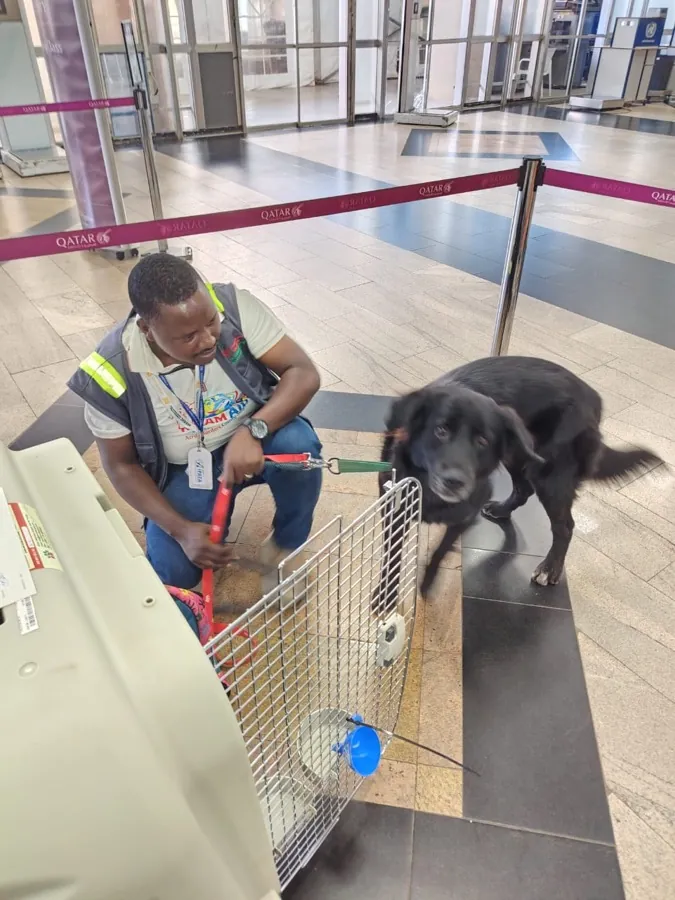
If your pet is flying somewhere that requires a rabies titer test, that single test will decide your timeline. Everything else can be arranged around it. This one cannot be hurried.
What it actually measures
A rabies titer test — properly, a rabies antibody titration test — is a blood test. It does not check whether your pet was vaccinated; the vaccination record does that. It checks whether the vaccination worked, by measuring the level of rabies antibodies circulating in the blood.
The destination country sets a minimum threshold. Your pet's result has to be at or above it.
Who needs one
Broadly, destinations that are rabies-free or that maintain strict rabies control. That includes much of the European Union and countries such as Australia, among others. Destinations within the region — Kenya, for example — often do not require it.
This is exactly the kind of rule that changes, so treat the general picture above as orientation and let us confirm the current requirement for your specific destination.
The timing, which is the whole game
Four things have to happen in order, and each has a constraint:
- Microchip. Before the rabies vaccination, or the vaccination may not count.
- Rabies vaccination. Recorded against the microchip number.
- Blood sample drawn. Not immediately — there is a minimum interval after vaccination, because the antibodies need time to develop. Draw too early and a healthy, properly vaccinated pet can return a result below threshold.
- Waiting period. Here is the part that catches people out: many countries require a waiting period counted from the date the sample was taken, not from the date the laboratory issued the result. That period is frequently measured in months.
So the sample date is the number that matters. Everything downstream is counted from it. Getting that blood draw done early is the single most useful thing you can do for a long-haul move — even before you have a firm departure date.
Where the sample goes
The sample must be tested by a laboratory approved by the destination country. Not every laboratory qualifies for every destination, and the approved list is specific. We handle submission, tracking and the certificate.
If the result is below threshold
It is uncommon, but it happens. The pet is revaccinated and retested, and the waiting period restarts from the new sample date.
There is no way to appeal a low titer and no way to shorten the wait. This is the main reason we build slack into a schedule wherever the departure date allows it — a retest inside a generous timeline is an inconvenience; the same retest against a fixed relocation date is a crisis.
What this means for planning
If your destination requires a titer test, work backwards from the waiting period, not forwards from today:
- Book the microchip and rabies vaccination as soon as you know you are moving — even if the date is vague
- Get the blood sample drawn at the earliest permitted interval afterwards
- Treat the sample date as the start of the clock
- Arrange the import permit, flights, crate and health certificate inside the waiting period, not after it
Families who call us the week they hear about a job abroad usually fly on the date they wanted. Families who call once the flights are booked often do not.
The short version
The titer test measures whether the rabies vaccination worked. It cannot be taken immediately after vaccination, it must go to an approved laboratory, and for many destinations a long waiting period begins on the day the blood is drawn.
If you know a move is coming — even loosely — talk to us now rather than when the tickets are booked. The blood draw costs very little and buys you months.