
Pet travel requirements
The rules are a sequence, not a list.
Almost every delayed departure we see comes from one step being done in the wrong order or on the wrong day. Here is the order that works, and what each step actually involves.
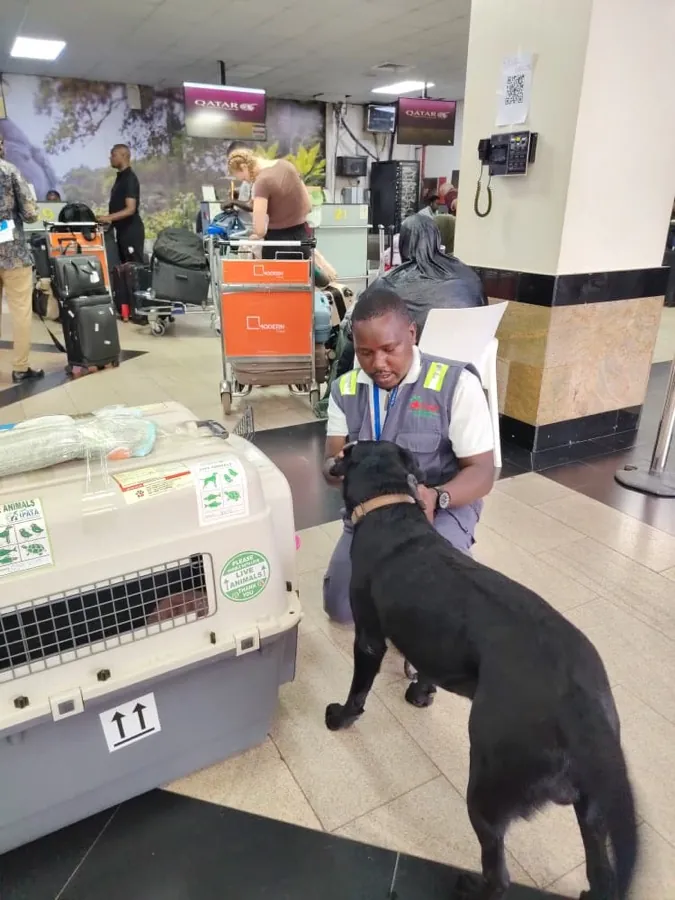
Requirements differ by country and change without notice. Use this page to understand the shape of the process — then let us confirm the current rules for your exact destination before you book a flight.
The order that works
Seven steps, in this order.
Skip one or run two out of sequence and the destination country can reject the paperwork — usually at the point where it is most expensive to fix.
-
01
Microchip
An ISO-standard microchip goes in first, because every document that follows is tied to that number. A rabies vaccination given before the chip is often not accepted.
Do this first · any time
-
02
Rabies vaccination
Given after the microchip and recorded against it. Some destinations also set a minimum age and a minimum waiting period after vaccination before travel.
After the microchip
-
03
Rabies titer test (where required)
A blood sample drawn at the correct interval after vaccination and sent to an approved laboratory. Many countries then impose a waiting period counted from the date the sample was taken — not from the result.
Longest lead time · plan around this
-
04
Destination import permit
Applied for with the destination country's authority. We track it to approval before committing to a flight date, because an unapproved permit is the fastest way to lose a booking.
Weeks before departure
-
05
Parasite treatment
Internal and external parasite treatment, given inside a defined window before arrival and recorded by the veterinarian. Several destinations are strict about the exact timing.
Days before departure
-
06
Veterinary health certificate
A fit-to-fly examination and certificate issued close to departure, then endorsed as the destination requires. It has a short validity window, so it is deliberately one of the last steps.
Final week
-
07
Export clearance & airline acceptance
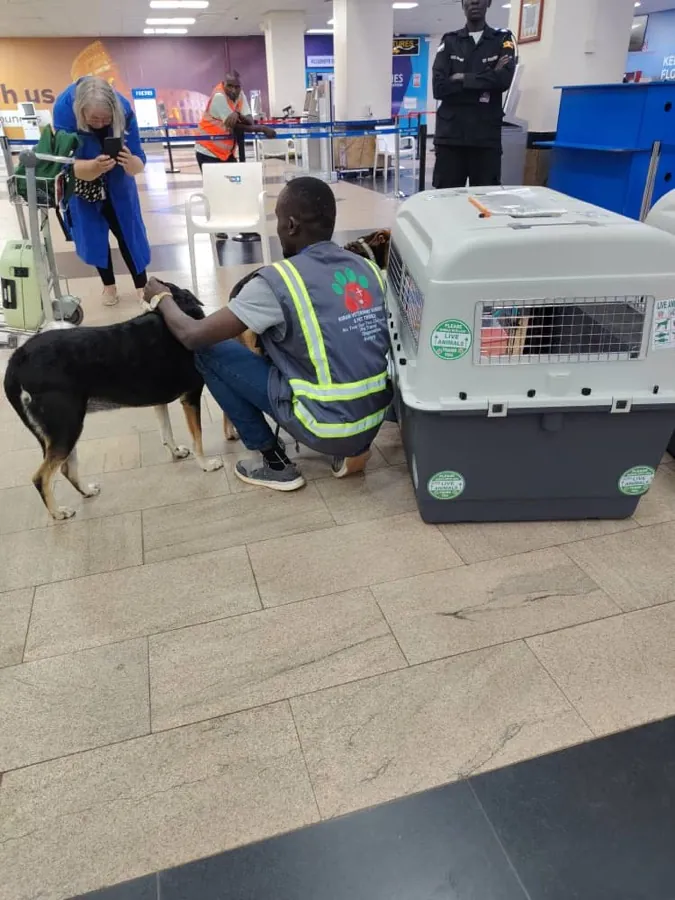
Export documentation completed at Entebbe, crate checked against IATA requirements, and your pet accepted by the airline. We are there for this part.
Travel day
Destination differences
Some countries are much stricter.
The seven steps above are the common shape. What changes between destinations is how long each one takes and how tightly the windows are enforced.
- Rabies-free and rabies-controlled destinations generally require titer testing plus a waiting period, which dominates the timeline
- Some destinations require pre-approval or a reservation slot at the arrival quarantine facility before a flight can be booked
- Breed and airline restrictions apply on some routes, including seasonal embargoes on flying certain breeds
- Onward domestic legs may have their own paperwork and crate rules once your pet lands
Good to know
Questions about the paperwork.
The things people most often get wrong before they call us.
☎Prefer to talk?
+256 771 605 442
How long does it take to prepare a pet for international travel?
Most routes need 8–16 weeks. Destinations that require a rabies titer test with a waiting period — including much of the European Union — commonly take longer, and some countries such as Australia require considerably more time.
Does the microchip have to come before the rabies vaccination?
Yes, for most destinations. If a pet is vaccinated against rabies before it is microchipped, many authorities will not accept that vaccination and it has to be repeated, restarting the clock.
What is a rabies titer test?
A blood test that measures the level of rabies antibodies after vaccination. Rabies-controlled and rabies-free destinations use it to confirm the vaccination worked. The sample must be drawn at the right interval after vaccination and sent to an approved laboratory, and many countries then require a waiting period after the sample date.
How long is a veterinary health certificate valid?
It is issued close to departure and has a short validity window that varies by destination and airline — often around ten days, sometimes less. This is why the certificate is one of the last steps, not one of the first.
Do the rules ever change?
Yes, and they change without much notice. Treat any published requirement as a guide and confirm the current rules for your destination with us before you book flights.
Get your pet’s actual timeline.
Send us the destination and rough dates and we will map the sequence against a calendar — including the dates that cannot move.