Length
Nose to the base of the tail. The crate length must exceed this plus roughly half the length of the front leg from the ground to the elbow.

IATA-compliant travel crates
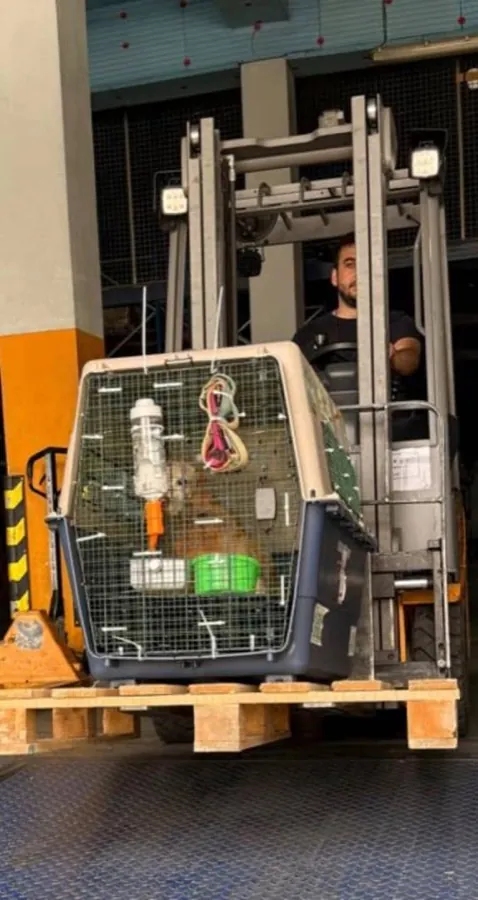
An airline can refuse a pet at the counter for a crate that is the wrong size, the wrong build, or missing a label. We measure, source, fit out and check it — weeks before anyone is standing at a departure desk.
Getting the size right
Take these with your pet standing naturally on all four feet — not sitting, and not stretched out. Bring the numbers to us and we will size the crate against them.
Nose to the base of the tail. The crate length must exceed this plus roughly half the length of the front leg from the ground to the elbow.
Ground to the top of the shoulder. Used together with the length measurement to work out the minimum floor area.
Across the widest point of the shoulders. The crate must be at least twice this wide so they can turn around without scraping.
Ground to the top of the head — or to the ear tips for pets whose ears stand up. Nothing should touch the roof when they stand.
The test an airline applies: your pet must be able to stand fully upright without their head or ears touching the roof, turn around comfortably, and lie down in a natural position. If any of those three fail, the crate is refused.
What makes a crate compliant
The IATA Live Animals Regulations set out how the crate must be built, not only how big it is. This is what we check before a crate goes anywhere near a terminal.
Crate familiarisation
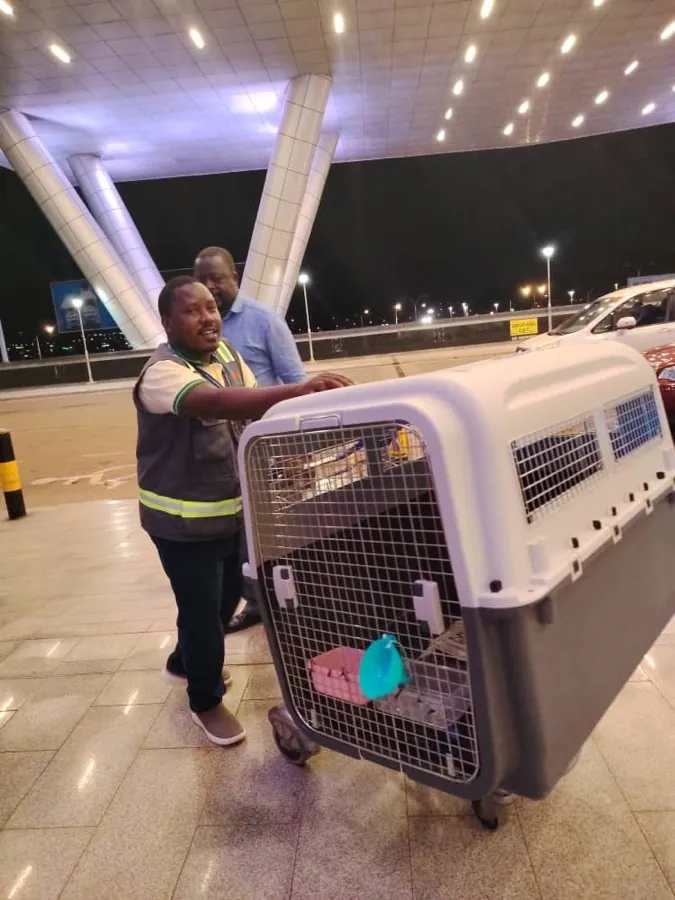
The single best thing you can do for your pet's flight costs nothing and takes a few weeks. Sedation is not the answer — most airlines will refuse a sedated animal.
Put the crate somewhere they already spend time, door open and fixed back. Feed them near it, then in the doorway, then just inside. Never close the door in this phase.
Weeks 1–2
Meals, favourite toys and a familiar blanket live in the crate. You want them going in on their own when nothing is happening.
Weeks 2–3
Close the door for a minute while you stay in the room, then build up. Always open it before they get anxious, not after.
Weeks 3–4
Work up to a few hours, then a short car trip in the crate, so being carried and moved is already familiar by travel day.
Final weeks
Good to know
What owners ask us most about crates and flying.
☎Prefer to talk?
+256 771 605 442
Measure your pet standing: length from nose to base of tail, height from the ground to the top of the head or ear tips, width across the shoulders, and height at the shoulder. The crate must let them stand fully upright without touching the roof, turn around, and lie down naturally.
You can, but bring it to us before you book. Airlines refuse crates at the counter for the wrong size, plastic-only doors, missing ventilation on the required number of sides, or fastenings that are not bolted. We would rather check it weeks early than on travel day.
Sedation is generally advised against for air travel and many airlines will refuse a sedated animal. Altitude affects breathing and temperature regulation, and a sedated pet cannot right itself if the crate shifts. Crate familiarisation is the better preparation.
As early as you can — several weeks is ideal. The goal is that the crate is somewhere they already choose to sleep, not somewhere they are put on the worst morning of their year.
Send the four numbers — or bring your pet in and we will take them — and we will size, source and fit the crate.