
Blog · 28 August 2026
Airline requirements: cargo, baggage or cabin?
The destination sets the paperwork. The airline sets almost everything else — how your pet travels, in what, at what temperature, and whether they fly at all.
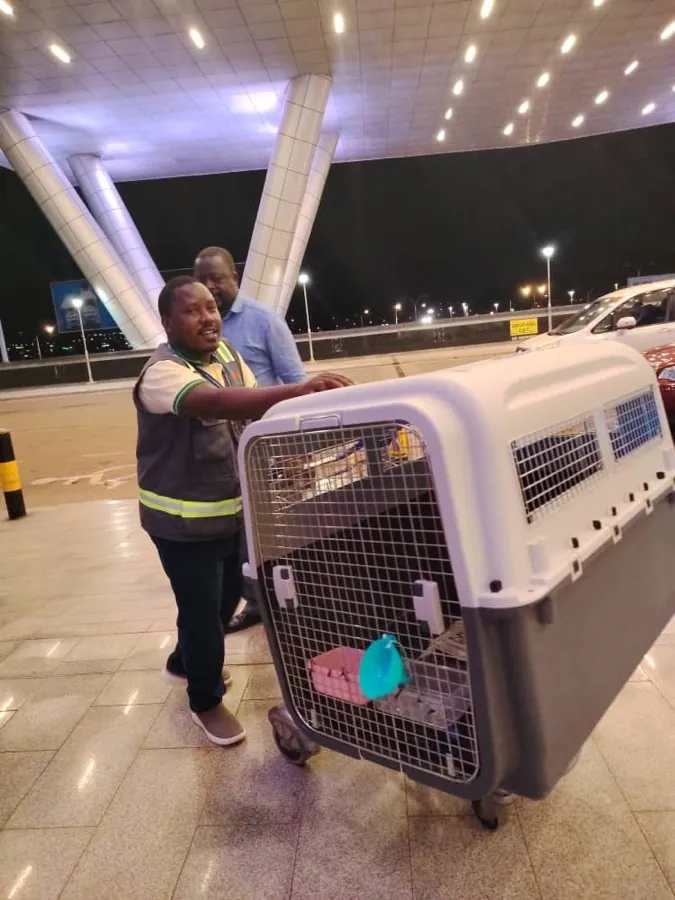
Owners plan around the destination's rules and are then surprised when the airline turns out to have opinions of its own. In practice the carrier decides more of your pet's journey than the destination does.
Three ways a pet can fly
Manifest cargo. The pet travels as freight on its own air waybill, in the temperature-controlled and pressurised hold. This is how most medium and large dogs travel long-haul out of Entebbe. It does not require you to be on the same flight.
Accompanied baggage. The pet travels in the hold on your booking, checked in with your luggage. Fewer airlines offer it, and it requires you to be on the same aircraft.
In cabin. Only for small animals within a carrier under the seat, on airlines that permit it, on routes that permit it. The combined pet-and-carrier weight limit is low and strictly enforced.
Which of these is available is a function of the airline, the aircraft, the route and your pet's size — not of your preference.
Breed restrictions are an airline matter
Snub-nosed breeds — bulldogs, pugs, boxers, Persian cats and others — have a harder time regulating temperature and breathing under stress. Many airlines restrict or refuse them in the hold, some year-round, some seasonally, and some only above a certain temperature at either end.
This is separate from destination breed rules. A country may admit a breed the airline will not carry, and vice versa. Both have to clear.
Seasonal embargoes
Airlines commonly stop carrying animals in the hold when forecast ground temperatures at departure, transit or arrival exceed a threshold. Because the check applies at every point on the route, a hot layover can block an otherwise fine itinerary.
Planning a move into a destination's summer is worth flagging to us early. Sometimes the answer is a different routing; sometimes it is a different month.
Crate rules on top of IATA
The IATA Live Animals Regulations are the baseline. Individual carriers layer their own requirements on top — specific fastening types, wheels removed, particular labelling, maximum crate dimensions for the aircraft's hold door.
That last one catches large-breed owners. A crate that is correctly sized for the dog can still be too large for the aircraft serving that route. We check crate dimensions against the aircraft, not just against the animal. Our crate guide covers the rest.
Connections
Every connection is a point where your pet is unloaded, moved and reloaded, and where a delay becomes time in a crate. Some airlines cap the total journey time for live animals; some will not accept a pet where a connection is below a minimum transfer window.
Fewer stops is almost always worth more than a cheaper fare. Where a layover is unavoidable, we look at whether the transit airport has animal handling facilities.
Booking is not the same as acceptance
Two things people conflate:
- The booking reserves space for a live animal on that flight. Space is genuinely limited — aircraft have a maximum number of animals, and it fills.
- The acceptance happens at the counter on the day, when the airline inspects the pet, the crate and the documents and decides whether to carry them.
A booking does not guarantee acceptance. Everything we do before travel day — the crate check, the document file, the fit-to-fly examination — exists to make acceptance a formality.
What happens at acceptance
We present the pet and the crate. The airline checks that the animal can stand, turn and lie down; that the crate is compliant and correctly labelled; that water is available; and that the documentation matches the microchip number.
Then the crate is closed, sealed and taken. We stay until it is loaded and message you when it is.
No sedation
Most airlines will refuse a sedated animal, and they are right to. Sedation impairs breathing and temperature regulation at altitude and stops a pet from righting itself if the crate shifts. Preparation is the alternative, and it works better.
The practical takeaway
Choose the destination, then let the airline options shape the date and the route rather than the other way round. Tell us where and roughly when and we will tell you which carriers actually serve that move for your pet.